



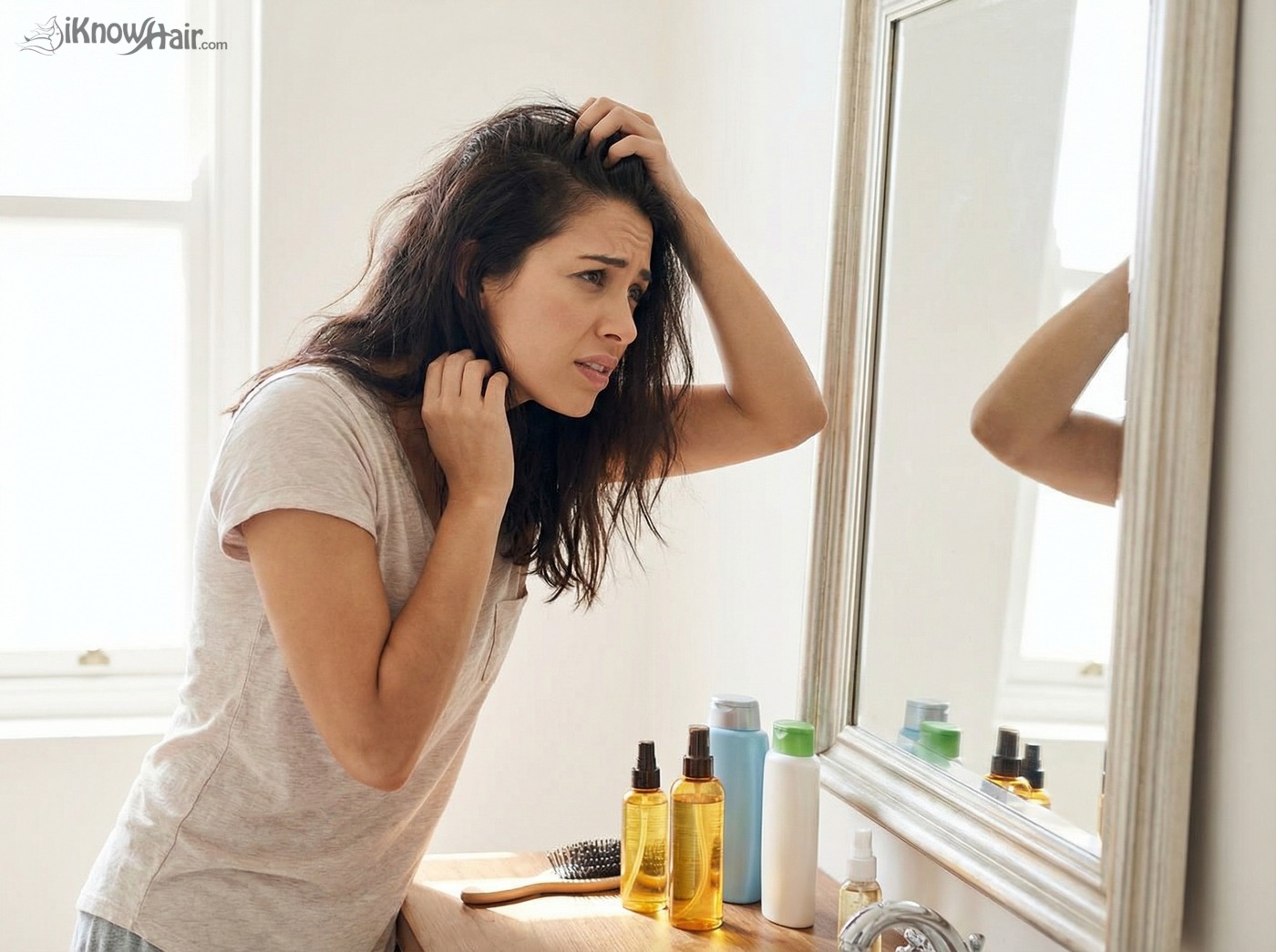
One of the most common yet frustrating hair concerns is dealing with oily roots and dry ends at the same time. This combination hair type requires a delicate balancing act – you need to control excess oil at the scalp while providing moisture to parched ends. Sound familiar? You’re not alone, and there are effective solutions.
Updated for 2026 with the latest hair care techniques and product recommendations.
Why Do You Have Oily Roots But Dry Ends?
This frustrating combination typically occurs due to several factors:
- Hair Length: The longer your hair, the harder it is for natural scalp oils (sebum) to travel down the hair shaft to moisturize the ends
- Over-washing: Frequent shampooing strips oils from your scalp, causing it to overcompensate by producing even more oil
- Heat Damage: Regular use of blow dryers, flat irons, and curling wands dries out your ends while your roots remain oily
- Chemical Treatments: Coloring, bleaching, and perming damage the hair shaft, leading to dry, porous ends
- Wrong Products: Using products not suited for combination hair can worsen the imbalance
- Environmental Factors: Sun exposure, chlorine, and pollution damage ends while not affecting the scalp as much
The Right Way to Wash Combination Hair
Your washing technique matters more than you might think:
Step 1: Focus Shampoo on Roots Only
Apply shampoo primarily to your scalp and roots. Massage gently with fingertips (not nails) to remove oil and buildup. Let the suds run through the lengths as you rinse – this provides enough cleansing without stripping moisture from your ends.
Step 2: Condition the Ends Only
Apply conditioner from mid-length to ends, avoiding the roots entirely. Leave it on for 2-3 minutes before rinsing with cool water to seal the cuticle.
Step 3: Wash Frequency
Aim for every 2-3 days rather than daily. If you need to refresh between washes, use dry shampoo at the roots only.
Best Products for Oily Roots and Dry Ends
Shampoo
Look for:
- Clarifying or balancing shampoos for the roots
- Sulfate-free formulas that cleanse without over-stripping
- Ingredients like tea tree oil, salicylic acid, or charcoal for oil control
Conditioner
Choose:
- Rich, moisturizing conditioners for the ends
- Ingredients like argan oil, shea butter, keratin, or hyaluronic acid
- Leave-in conditioners for extra hydration
Treatments
- Weekly hair mask: Apply to ends only for deep conditioning
- Scalp scrub: Use monthly to remove buildup and balance oil production
- Hair oil: Apply lightweight oils (argan, jojoba) to ends before bed
Styling Tips for Combination Hair
| Do | Don’t |
|---|---|
| Use heat protectant before styling | Apply styling products to roots |
| Let hair air dry when possible | Use high heat settings |
| Apply dry shampoo before hair gets oily | Touch your hair frequently |
| Use lightweight serums on ends | Brush hair when wet |
DIY Treatments for Oily Roots, Dry Ends
Apple Cider Vinegar Rinse (For Roots)
Mix 1 tablespoon ACV with 1 cup water. After shampooing, pour over scalp, massage briefly, then rinse. This helps balance scalp pH and reduce oiliness.
Honey and Olive Oil Mask (For Ends)
Mix 2 tablespoons olive oil with 1 tablespoon honey. Apply to ends only, leave for 20 minutes, then shampoo out. This deeply moisturizes without affecting roots.
Lifestyle Changes That Help
- Clean your hairbrush weekly – it transfers oil back to clean hair
- Change your pillowcase frequently – oil and product buildup transfers while you sleep
- Stay hydrated – drinking water helps overall hair health
- Eat a balanced diet – omega-3s and vitamins support healthy hair
- Get regular trims – removing split ends prevents further damage traveling up the shaft
When to See a Professional
Consider visiting a dermatologist or trichologist if:
- Your scalp is excessively oily despite proper care
- You notice scalp irritation, flaking, or hair loss
- Home treatments aren’t improving the condition after 4-6 weeks
Frequently Asked Questions
Can I use two different shampoos?
Yes! Some people use a clarifying shampoo for roots and a moisturizing one that just runs through the ends. This “multi-masking” approach for hair works well.
Will this hair type ever balance out?
With consistent proper care, many people see improvement within 4-8 weeks. Your scalp may produce less oil once it’s not being over-stripped by harsh products.
Should I skip conditioner to reduce oiliness?
Never skip conditioner – just apply it correctly (ends only). Your ends need moisture, and skipping conditioner will make them even drier and more prone to breakage.
Final Thoughts
Managing oily roots and dry ends requires a targeted approach – treating each area of your hair according to its specific needs. With the right products, techniques, and a bit of patience, you can achieve balanced, healthy-looking hair from root to tip.
For more hair care tips, check out our guides on normal hair type care and dry hair treatments.