



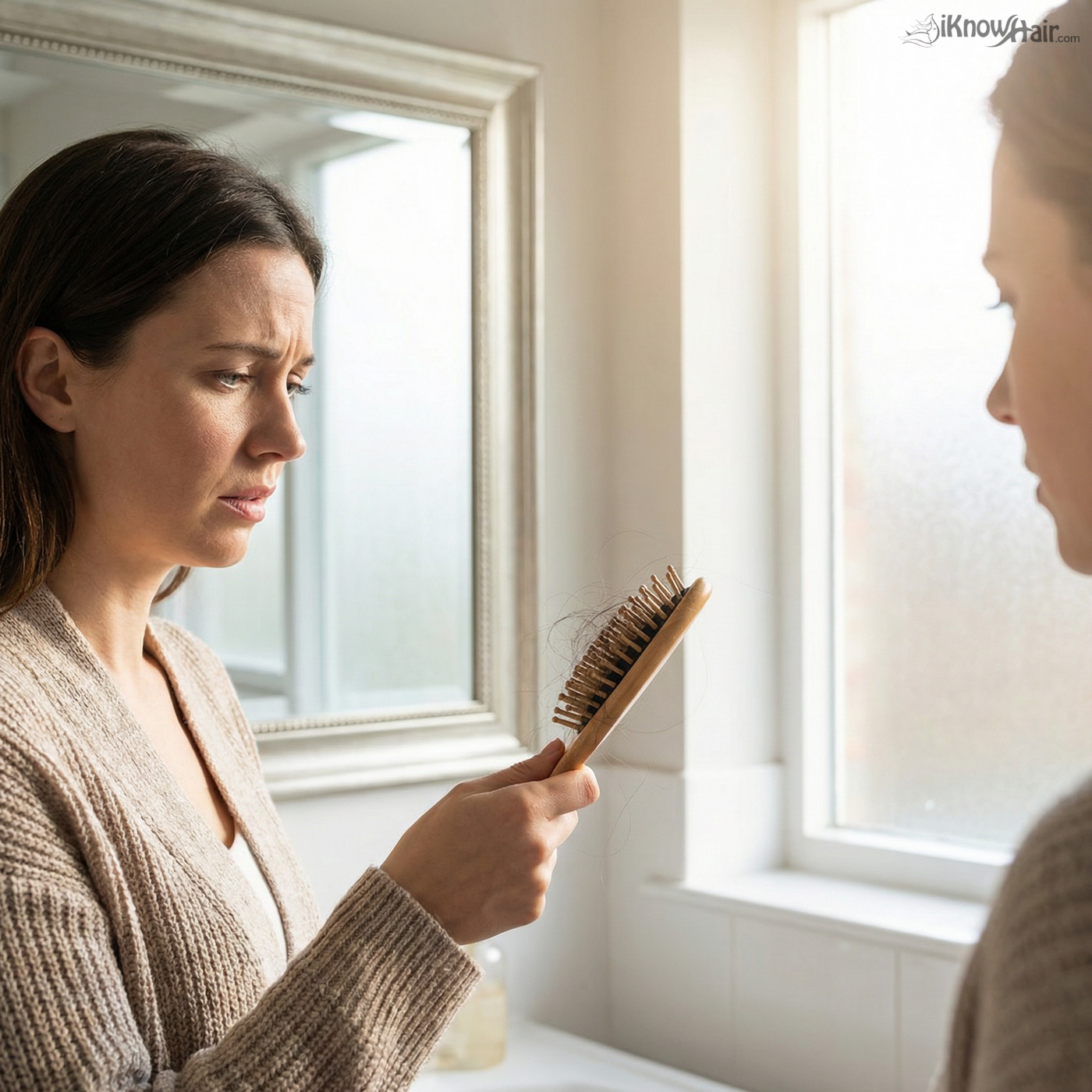
Noticing more hair in your brush or shower drain can be alarming — but before you panic, it helps to understand what’s actually normal, what might be causing increased shedding, and when you should genuinely be concerned.
This guide explains the real causes of hair loss, what science says about treatments, and how to tell the difference between temporary shedding and something that needs medical attention.
Updated for 2026 with current medical understanding and realistic expectations.
How Much Hair Loss Is Actually Normal?
The average person loses 50 to 100 hairs per day as part of the normal hair growth cycle. This sounds like a lot, but considering you have around 100,000 hair follicles on your scalp, it’s a tiny percentage.
Hair growth happens in three phases:
- Anagen (growth phase): Lasts 2-7 years. About 85-90% of your hair is in this phase at any time.
- Catagen (transition phase): Lasts about 2 weeks. The hair follicle shrinks.
- Telogen (resting/shedding phase): Lasts about 3 months. The hair falls out, and a new hair begins growing.
When this cycle is disrupted — by stress, illness, hormones, or other factors — more hairs can enter the shedding phase at once, leading to noticeable hair loss.
Types of Hair Loss: Understanding the Difference
Not all hair loss is the same. Identifying the type helps determine whether it’s temporary, treatable, or something to discuss with a doctor.
Telogen Effluvium (Temporary Shedding)
What it is: A temporary increase in hair shedding, usually triggered by a specific event.
Common triggers:
- Major stress or emotional trauma
- Illness, surgery, or high fever
- Significant weight loss or nutritional deficiency
- Childbirth (postpartum shedding)
- Stopping birth control pills
- Certain medications
Timeline: Hair loss typically begins 2-3 months after the triggering event and resolves within 6-9 months once the cause is addressed.
Prognosis: Generally reversible. Hair grows back once the underlying cause is resolved.
Androgenetic Alopecia (Pattern Hair Loss)
What it is: The most common cause of hair loss, affecting both men and women. It’s hereditary and related to hormone sensitivity.
In women: Usually appears as diffuse thinning on the top of the scalp, with the hairline typically preserved.
In men: Receding hairline and thinning at the crown.
Prognosis: Progressive without treatment. Some treatments can slow progression or promote regrowth, but it’s not fully reversible.
Alopecia Areata (Autoimmune)
What it is: An autoimmune condition where the immune system attacks hair follicles, causing patchy hair loss.
Appearance: Smooth, round bald patches, often appearing suddenly.
Prognosis: Unpredictable. Hair may regrow spontaneously, but the condition can recur. Medical treatment may help.
Traction Alopecia (Styling Damage)
What it is: Hair loss caused by repeated pulling or tension on hair follicles.
Common causes: Tight ponytails, braids, extensions, or hairstyles that pull on the hairline.
Prognosis: Reversible if caught early. If styling habits continue, damage can become permanent.
Common Causes of Hair Loss in Women
1. Hormonal Changes
Hormones play a significant role in hair growth. Fluctuations can trigger temporary or ongoing hair loss.
- Pregnancy and postpartum: Many women experience thicker hair during pregnancy (due to prolonged growth phase), followed by significant shedding 2-4 months after delivery. This is temporary.
- Menopause: Declining estrogen levels can lead to thinner hair and increased shedding.
- Thyroid disorders: Both hypothyroidism and hyperthyroidism can cause hair loss. A blood test can diagnose this.
- PCOS: Polycystic ovary syndrome can cause hair thinning on the scalp (while increasing hair growth elsewhere).
2. Nutritional Deficiencies
Hair follicles require adequate nutrients to function properly. Deficiencies that can affect hair include:
- Iron: One of the most common causes of hair loss in women, especially those with heavy periods.
- Vitamin D: Low levels are associated with hair loss, though the relationship isn’t fully understood.
- Protein: Severe protein deficiency can cause hair shedding.
- Biotin: True biotin deficiency is rare but can cause hair loss. Note: Biotin supplements are heavily marketed but only help if you’re actually deficient.
- Zinc: Deficiency can contribute to hair shedding.
Important: Taking supplements without a confirmed deficiency is unlikely to help and can sometimes cause harm. A blood test is the best way to identify actual deficiencies.
3. Stress
Significant physical or emotional stress can push more hair follicles into the shedding phase (telogen effluvium). This typically occurs 2-3 months after the stressful event — which is why people often don’t connect the cause to the effect.
Chronic stress may also worsen existing conditions like androgenetic alopecia.
4. Medications
Some medications can cause hair loss as a side effect:
- Blood thinners
- Some blood pressure medications
- Certain antidepressants
- Acne medications (like isotretinoin)
- Chemotherapy drugs (severe, but usually temporary)
If you suspect a medication is causing hair loss, talk to your doctor before stopping it.
5. Styling Damage
While styling doesn’t cause hair to fall from the root in most cases, it can cause breakage that mimics hair loss:
- Excessive heat styling
- Chemical treatments (bleaching, perms, relaxers)
- Tight hairstyles that pull on the hairline
This type of damage is usually reversible with gentler practices, though it takes time for healthy hair to grow out.
What Actually Works for Hair Loss?
There’s a lot of misinformation about hair loss treatments. Here’s what science actually supports:
Treatments with Evidence
| Treatment | What It Does | Notes |
|---|---|---|
| Minoxidil (Rogaine) | Stimulates hair growth, prolongs growth phase | FDA-approved. Available over-the-counter. Must be used continuously to maintain results. |
| Finasteride (Propecia) | Blocks DHT hormone that shrinks follicles | Prescription only. Primarily for men. Not recommended during pregnancy. |
| Spironolactone | Anti-androgen medication | Sometimes prescribed for women with androgenetic alopecia. Prescription only. |
| PRP (Platelet-Rich Plasma) | Injections using your own blood components | Emerging evidence suggests it may help. Expensive. Results vary. |
| Addressing deficiencies | Correcting iron, vitamin D, or other deficiencies | Only works if you actually have a deficiency. Get tested first. |
What Probably Doesn’t Work
- Most “hair growth” shampoos: Shampoo stays on your scalp for seconds. It’s unlikely to have significant effects on hair growth.
- Biotin supplements (if you’re not deficient): Heavily marketed but won’t help unless you have a rare deficiency.
- Essential oils: Some studies show minor effects (like rosemary oil), but evidence is limited and effects are modest at best.
- Scalp massages: May feel good and improve circulation temporarily, but no strong evidence for regrowing hair.
When to See a Doctor
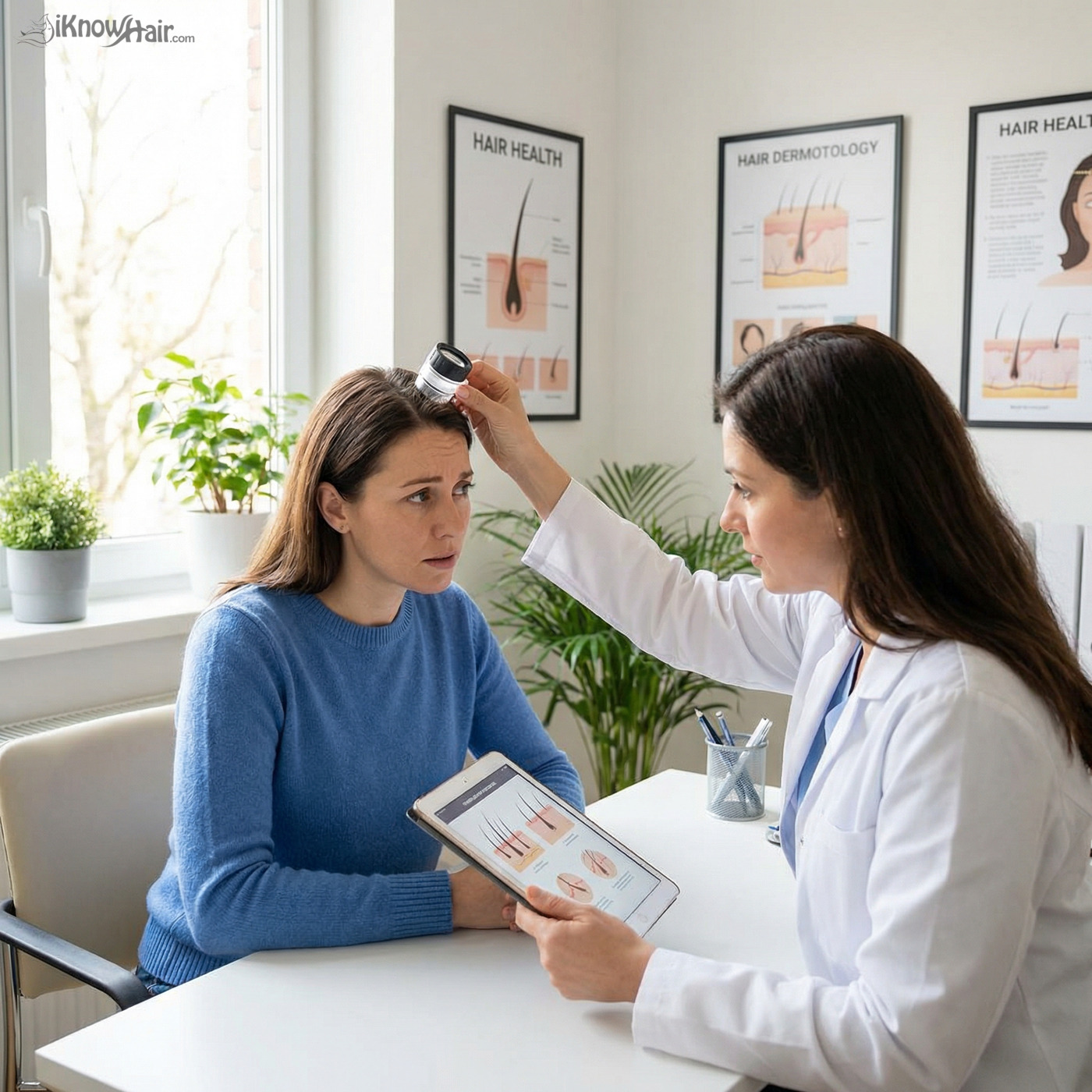
Consider seeing a dermatologist if:
- You’re losing hair in clumps or patches
- Hair loss is sudden or rapid
- You notice bald spots
- Your scalp is red, itchy, or painful
- Hair loss continues for more than 6 months
- You’re concerned about the amount of hair you’re losing
A dermatologist can examine your scalp, run blood tests, and sometimes perform a scalp biopsy to determine the exact cause.
Practical Tips for Managing Hair Loss
Be Gentle with Your Hair
- Avoid brushing wet hair — it’s more fragile when wet
- Use a wide-tooth comb instead of a brush
- Minimize heat styling
- Avoid tight hairstyles that pull on the hairline
Support Overall Hair Health
- Eat a balanced diet with adequate protein, iron, and vitamins
- Manage stress through exercise, sleep, or other methods
- Don’t skip meals or follow extremely restrictive diets
Set Realistic Expectations
- Hair grows about 0.5 inches per month — recovery takes time
- Temporary shedding usually resolves within 6-9 months
- Some types of hair loss require ongoing treatment to maintain results
- Not all hair loss is reversible — and that’s okay
The Emotional Side of Hair Loss
Hair loss can be emotionally difficult, especially for women in a culture that ties femininity to hair. These feelings are valid.
If hair loss is affecting your mental health, consider:
- Talking to a therapist who understands body image concerns
- Connecting with others experiencing hair loss (online communities can help)
- Exploring styling options like volumizing products, hair toppers, or wigs if desired
Remember: Your worth isn’t determined by your hair density.
Final Thoughts
Hair loss is common, and in many cases, it’s temporary or treatable. The key is understanding the cause — which often requires patience and sometimes medical testing.
Don’t panic, but don’t ignore persistent or sudden changes either. If you’re concerned, seeing a dermatologist is the most reliable path to answers.
For more hair care guidance, see our articles on treating dry hair and caring for damaged hair.
Medical Disclaimer: This article is for informational purposes only and does not constitute medical advice. Hair loss can have many causes, some requiring medical treatment. Please consult a healthcare provider or dermatologist for personalized advice.