



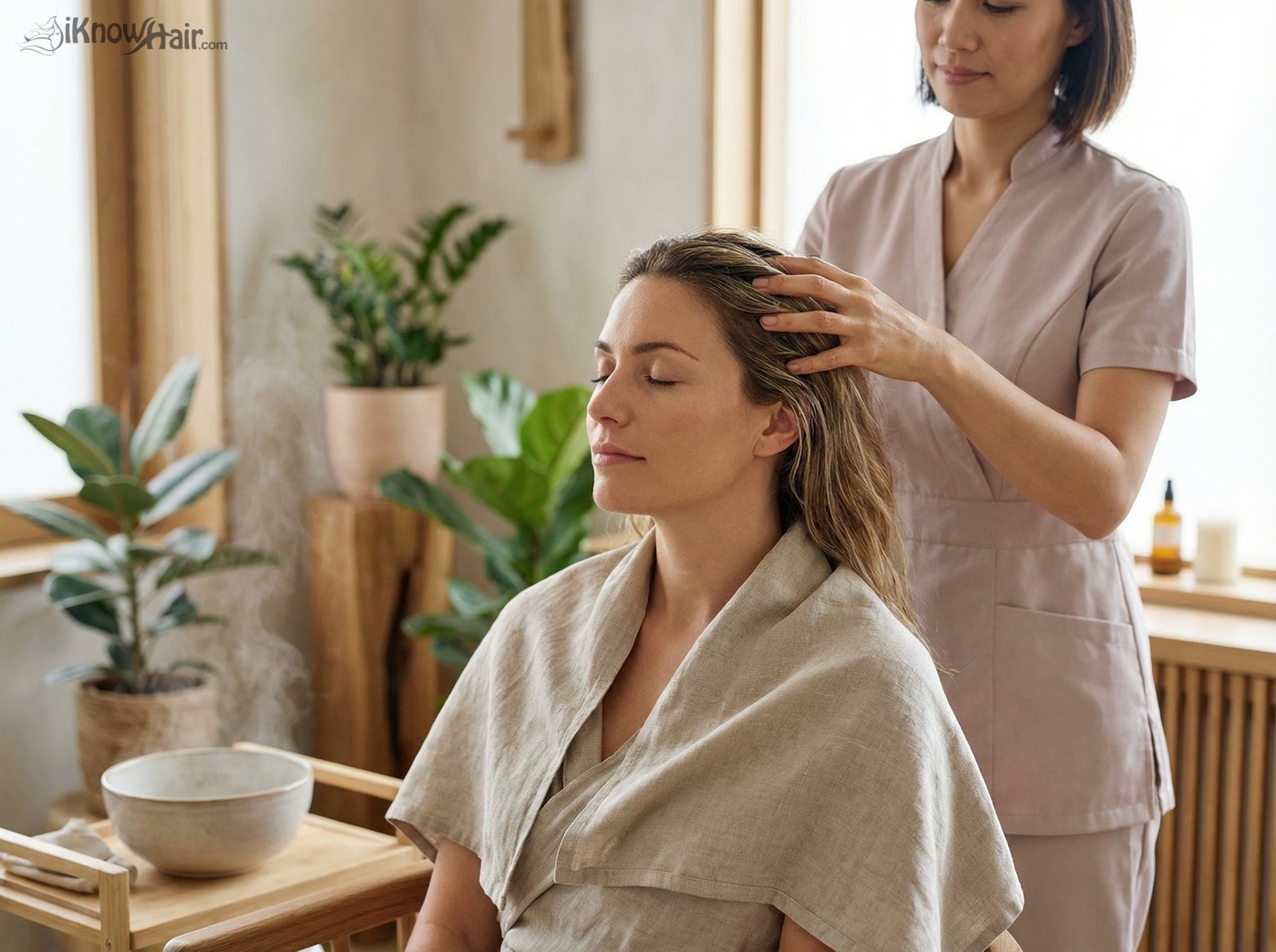
Healthy, beautiful hair starts at the scalp. While we often focus on treating our strands, neglecting scalp health is like watering a plant’s leaves while ignoring its roots. Proper hair and scalp treatment creates the foundation for strong, shiny, and vibrant hair growth.
Updated for 2026 with the latest scalp care treatments and techniques.
Why Scalp Health Matters
Your scalp is an extension of your skin – it needs care, attention, and the right nutrients to function properly. A healthy scalp:
- Produces balanced amounts of sebum (natural oil)
- Maintains proper blood circulation to hair follicles
- Supports healthy hair growth cycles
- Prevents issues like dandruff, irritation, and hair loss
- Keeps hair anchored securely in follicles
Signs Your Scalp Needs Attention
Watch for these warning signs:
- Flaking or dandruff: Indicates dryness or fungal issues
- Itchiness: Could signal dryness, product buildup, or sensitivity
- Excessive oiliness: May result from overwashing or hormonal factors
- Redness or irritation: Signs of inflammation or allergic reaction
- Hair thinning: Often starts with compromised scalp health
- Soreness or tenderness: Could indicate tension or inflammation
Essential Scalp Treatments
1. Scalp Exfoliation
Just like facial skin, your scalp benefits from regular exfoliation to remove dead skin cells and product buildup.
How to exfoliate:
- Use a scalp scrub 1-2 times per week
- Massage gently with fingertips in circular motions
- Rinse thoroughly before shampooing
- Look for ingredients like sea salt, sugar, or salicylic acid
2. Scalp Massage
Regular scalp massage increases blood flow to hair follicles, promoting healthier hair growth.
Technique:
- Use fingertips (not nails) to massage in circular motions
- Start at the hairline, work toward the crown, then down to the nape
- Spend 5-10 minutes daily for best results
- Can be done dry or with oil
3. Oil Treatments
Natural oils nourish the scalp and help balance oil production.
| Oil | Best For |
|---|---|
| Tea Tree Oil | Dandruff, oily scalp, antimicrobial |
| Jojoba Oil | Balancing oil production, moisturizing |
| Peppermint Oil | Stimulating growth, cooling sensation |
| Rosemary Oil | Hair growth, thickness |
| Coconut Oil | Deep moisturizing, dry scalp |
4. Scalp Serums
Targeted serums address specific concerns like hair thinning, sensitivity, or dandruff. Apply directly to the scalp and massage in. Look for ingredients like:
- Niacinamide for oil control
- Caffeine for stimulating growth
- Hyaluronic acid for hydration
- Salicylic acid for buildup
DIY Scalp Treatments
Apple Cider Vinegar Rinse
- 1 part ACV to 4 parts water
- Apply after shampooing, let sit 2-3 minutes
- Rinse thoroughly
- Balances pH, removes buildup, adds shine
Brown Sugar Scalp Scrub
- 2 tbsp brown sugar
- 2 tbsp olive oil
- 5 drops tea tree oil
- Massage gently into wet scalp, rinse well
Aloe Vera Soothing Treatment
- Pure aloe vera gel applied directly to scalp
- Leave for 30 minutes before washing
- Calms irritation and moisturizes
Professional Scalp Treatments
For persistent issues, consider professional treatments:
- Scalp Facials: Deep cleansing and treatment at salons
- LED Light Therapy: Stimulates hair follicles and promotes growth
- Microneedling: Creates micro-channels for better product absorption
- PRP Treatment: Platelet-rich plasma injections for hair loss
- Trichologist Consultation: For diagnosing persistent scalp issues
Daily Scalp Care Routine
- Morning: Gentle scalp massage while styling (2 minutes)
- Wash Days: Focus shampoo on scalp, massage thoroughly
- Weekly: Exfoliating scrub or clarifying treatment
- Monthly: Deep oil treatment left on for 1-2 hours
- As Needed: Targeted serums for specific concerns
What to Avoid for Scalp Health
- Scratching with nails (use fingertips only)
- Using very hot water when washing
- Heavy silicone products that cause buildup
- Tight hairstyles that stress the scalp
- Ignoring persistent symptoms
Frequently Asked Questions
How often should I wash my hair for scalp health?
This varies by hair type, but generally 2-3 times per week. Over-washing can strip natural oils and irritate the scalp.
Can diet affect scalp health?
Absolutely. A diet rich in omega-3s, vitamins A, C, D, E, zinc, and biotin supports healthy scalp and hair.
Should I use scalp treatments if I have no problems?
Yes – preventive care is just as important as treatment. Regular exfoliation and massage benefit everyone.
Final Thoughts
Think of scalp care as the foundation of your hair care routine. By keeping your scalp clean, balanced, and nourished, you create the optimal environment for beautiful, healthy hair to thrive.
Want to learn more? Check out our guides on managing oily roots and treating dry hair.